

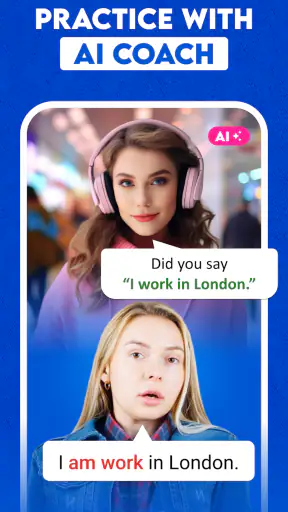
I came to Language Learning - Duo Speak with a fairly practical question: could an AI tutor make speaking practice easier to fit into an ordinary day, rather than turning English study into another large project? After spending time with it, my answer is yes, but with an important qualification. This is most useful when you want to speak regularly, receive immediate interaction, and build confidence through short sessions. It is less convincing as a complete replacement for a structured course, a human teacher, or serious exam preparation.
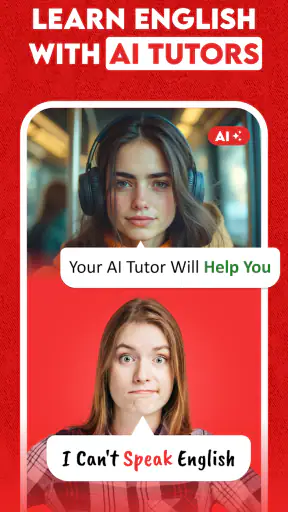
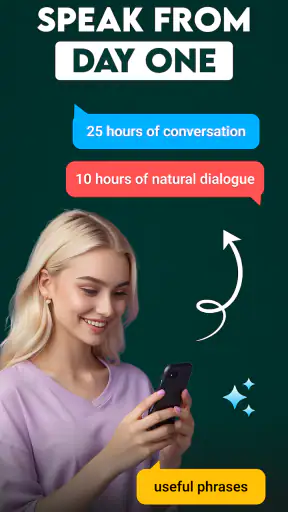
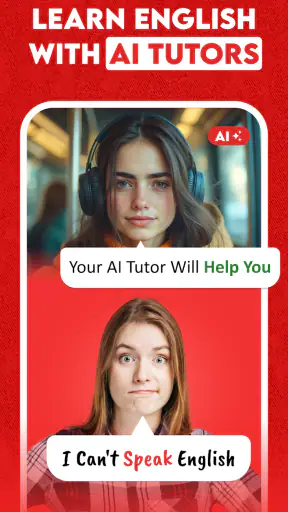
The app is an education tool from Visionary AI, and its central idea is simple: use an AI tutor to help you practise spoken English. That focus gives it a clearer purpose than many broad language apps. Instead of treating speaking as something saved for the end of a lesson, Duo Speak puts conversation at the centre. I found that appealing because understanding English silently and producing an answer aloud are very different skills.
It is free to install, with optional in-app purchases ranging from $2.99 to $59.99 per item. The app is rated for Everyone, has reached over one million installs, and holds a 4.4 average from around 9,100 ratings. Those figures suggest that it has found a substantial audience, but they do not remove the need to decide whether its particular learning style matches yours. The current version is 9.6 and it runs on Android 8.0 or later.
What I looked for before recommending it
When I judge a speaking app, I do not begin with the number of lessons or the appearance of its interface. I first ask whether it helps me speak when I would normally avoid speaking. A useful practice tool should reduce hesitation, make repetition easy, and give enough direction that I am not simply saying random sentences into a microphone.
I also look at the kind of learner it serves. Someone starting from the beginning needs clear explanations and controlled vocabulary. A learner who can already read English may need something quite different: quick conversation, correction, and help turning passive knowledge into active speech. Duo Speak is more interesting for the second group, although beginners can still benefit if they are willing to tolerate moments of uncertainty.
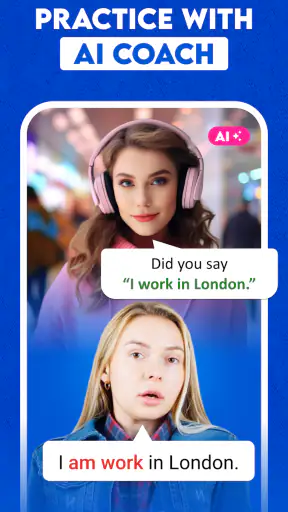
Another decision point is feedback. An AI tutor can respond immediately and is available without the social pressure of speaking to a person. That is a real advantage. At the same time, automated feedback should be treated as guidance rather than an unquestionable verdict. Pronunciation depends on accent, microphone quality, background noise, and the exact way a learner speaks. I would use the app to notice patterns and practise alternatives, not to decide that one imperfect sentence defines my ability.
Finally, I consider whether an app fits a repeatable routine. A beautifully designed lesson is not enough if every session feels like a chore. Speaking improves through frequent retrieval, so the best choice is often the tool you will actually open during a busy week. This is where the AI format can be especially convenient: there is no need to arrange a lesson or wait for another person to be available.
How the AI tutor changes everyday practice
The biggest strength is the lower barrier to starting a conversation. With a conventional textbook, I can understand a dialogue without ever producing the language myself. With a vocabulary app, I may recognise a word repeatedly while still freezing when I need it. A speaking-focused tutor pushes me toward the uncomfortable but valuable step of forming an answer.
I would use it in short blocks rather than treating it like a formal classroom. For example, before work I might practise introducing myself and describing the day ahead. On a commute, I could rehearse travel-related questions. In the evening, I might revisit a topic that caused hesitation earlier. The point is not to complete a heroic study session. The point is to create several low-pressure opportunities to speak.
One useful habit is to answer twice. On the first attempt, I speak naturally, even if the sentence is simple. On the second, I try to make the answer more precise or more conversational. This turns the tutor from a question-and-answer novelty into a small revision loop. I can hear where I rely on the same safe words and deliberately replace them with a better expression.
Another practical approach is to keep a personal list of recurring problems outside the app. If I repeatedly hesitate with past tense, question formation, or polite requests, I can make that the focus of future practice. An AI conversation can feel varied while still exposing the same weaknesses, so writing down those weaknesses prevents the sessions from becoming entertaining but unfocused.
Where Duo Speak is at its best
Its strongest use is regular spoken rehearsal without social pressure. I can make mistakes privately, try a sentence again, and continue without worrying that I am wasting a teacher’s time or holding up a conversation partner. For shy learners, this matters more than a long feature list. Confidence often grows from surviving small mistakes, and the app gives those mistakes a safe place to happen.
It also suits learners who understand more than they can say. If you can follow videos, read messages, or recognise common phrases but answer slowly, a speaking tutor addresses the gap directly. The experience is more active than reviewing flashcards because I have to retrieve language under a little pressure. That pressure is mild enough to repeat, which is exactly what makes it useful.
I particularly like the possibility of using it as a preparation tool. Before a trip, an interview, a presentation, or a difficult phone call, I would practise the relevant situation first. I would not expect the app to predict every real exchange, but rehearsing the opening lines and likely questions can remove the first layer of panic. The benefit is not memorising a script; it is becoming comfortable with the vocabulary needed to begin.
The app is also a sensible companion for independent learners who dislike fixed courses. Traditional programmes often move at a set pace, while a conversation tutor lets me spend more time on topics that matter to me. If I already know basic grammar, I can use speaking practice to make that knowledge more automatic instead of returning to explanations I have already understood.
Three ways to get more from each session
First, I would avoid giving the shortest possible answers. A one-word response may be correct, but it does not train the connected speech needed in real conversation. Even at a basic level, I would add a reason, example, or follow-up detail. “I like cooking” becomes “I like cooking because it helps me relax after work.” That small expansion creates more useful practice without requiring advanced grammar.
Second, I would deliberately revisit familiar topics. It is tempting to chase endless variety, but repeating a topic after a day or two reveals whether the language has become easier. The first attempt may be slow; the next should require less effort. If it does not, that topic is telling me where further practice is needed. This is a more meaningful test than simply counting how many conversations I have started.
Third, I would separate fluency practice from accuracy practice. During one session, I might focus on continuing without stopping, accepting simple wording. During another, I might slow down and pay attention to tense, articles, or pronunciation. Trying to correct everything at once can make speaking feel impossible. The app becomes more useful when I decide what kind of practice I am doing before I begin.
A fourth tip is to use the free access as a trial of the learning method, not merely as a preview of the interface. I would ask myself whether I actually speak aloud, whether the prompts keep me engaged, and whether the feedback helps me choose a better sentence. If the answer is no, paying for more access will not solve the underlying mismatch. If the answer is yes, the optional purchases can be considered for continued use rather than impulse spending.
Where another type of app may fit better
Duo Speak is not automatically the best choice for every English learner. If your main goal is building a large vocabulary from the beginning, a flashcard-based app may offer a more systematic way to review words. That kind of tool can be repetitive, but repetition is valuable when you need to remember a specific set of terms. Speaking practice is more effective once you have enough language to say something meaningful.
If grammar is your main obstacle, a structured course may be a better first step. A conversation can show that a sentence sounds wrong, but it may not fully explain the rule behind the problem. Learners preparing for a formal test may also need specialised reading, writing, listening, and timed practice. I would use Duo Speak alongside that preparation, not assume that conversation alone covers the whole exam.
Human tutoring remains preferable when you need nuanced correction, professional vocabulary, or a teacher who can adapt to a complicated personal history. A person can notice confusion, ask why you chose a particular phrase, and explain cultural context in a way an AI interaction may not match. The trade-off is convenience and cost: human lessons require scheduling and usually demand more commitment.
Language exchange services can be better for natural spontaneity and cultural contact. They expose you to different accents, personalities, and unexpected changes of subject. However, they can also be inconsistent. A partner may not correct mistakes, may disappear, or may want to practise your native language more than English. Duo Speak is the more dependable option when I want a private, immediately available speaking session.
There is also a difference between practising English and practising performance. If you need to deliver a presentation, I would not rely on open-ended conversation alone. I would prepare the actual presentation, record myself, and use the app for supporting questions and explanations. That combination is stronger than asking any single language tool to handle every part of communication.
What may make switching difficult
The main cost of switching to a speaking-first app is not technical; it is behavioural. Learners accustomed to tapping answers may feel exposed when they have to produce speech. Even when the tutor is artificial, speaking aloud demands more energy than recognising a word. I would expect the first sessions to feel less comfortable than a familiar quiz format, and I would judge the app after a consistent routine rather than after one awkward attempt.
There is also a risk of confusing conversation volume with progress. I can spend time answering prompts without addressing the grammar or vocabulary errors that keep returning. The solution is to set a narrow objective for each session and review the same difficulty later. Without that discipline, the app may become a pleasant speaking exercise instead of a clear learning plan.
Another trade-off is that AI interaction is convenient precisely because it is controlled. Real people interrupt, misunderstand, use slang, change topics, and speak with different accents. Duo Speak can help me become more willing to speak, but I would still seek human conversation when possible. The best progression, in my view, is private rehearsal first and less predictable communication afterward.
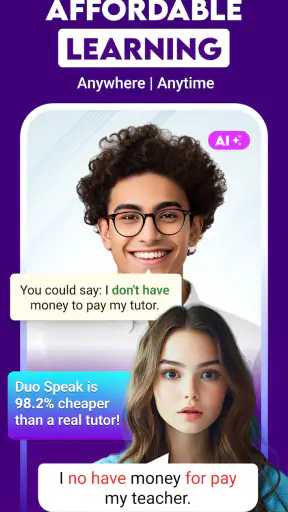
The purchase model also deserves attention. The app is free, but optional items cost between $2.99 and $59.99 each. I would not buy immediately. I would first establish whether the free experience fits my routine, then consider the price of continued access against alternatives such as a course, a tutoring session, or simply using free conversation opportunities. The right choice depends on how often I will use it, not on the size of the feature list.
Because the age rating is Everyone, it is approachable for a broad audience. That does not mean every learner will find the same level of challenge appropriate. A child, a complete beginner, and an advanced professional may all open the app with very different needs. I would especially encourage parents or teachers to pair it with a clear learning goal rather than treating the age rating as evidence that it replaces instruction.
My recommendation after weighing the alternatives
I recommend Language Learning - Duo Speak to learners who already know some English and want more courage, speed, and regularity when speaking. It is a particularly good fit if you study alone, dislike arranging lessons, or repeatedly postpone conversation because you are afraid of making mistakes. The AI tutor gives you a practical place to start, and the free entry point makes testing that habit relatively easy.
I would recommend it less strongly to someone who needs a complete beginner curriculum, detailed grammar teaching, exam-specific preparation, or professional feedback on high-stakes communication. In those situations, a structured course or human teacher should lead the plan, with this app serving as extra speaking practice if it proves useful.
My preferred routine would be modest: use it several times during the week, speak in full answers, revisit difficult topics, and keep a short record of repeated errors. Then test the language outside the app through a real conversation, voice message, or practical task. That final step matters because confidence built in a controlled setting needs to transfer to the unpredictable world.
After considering its purpose, alternatives, and optional cost, I see Duo Speak as a focused practice partner rather than a complete language school. That is not a weakness if you want exactly what it offers. If your biggest problem is finding a low-pressure way to speak English consistently, this is an app I would genuinely suggest trying before paying for a more demanding solution. Just keep your expectations precise: it can help turn knowledge into speech, but your wider progress will still depend on reading, listening, grammar, vocabulary, and contact with real people.


